

Sustainable yachting is no longer a future ambition; it is a present reality. And for many owners and captains making their first move towards greener bunkering, biodiesel is the natural place to start.
You do not need a new engine, a new yacht, or a completely overhauled fuel strategy. Biodiesel marine fuel works with your existing setup, slots into your current bunkering routine, and delivers a meaningful reduction in your vessel’s carbon footprint from the very first fill.
In this guide, we explain what yacht biodiesel is, why it matters, what to be aware of when using it, and how to make the switch with confidence.
What is Biodiesel, and why should yacht owners care?
Biodiesel is a renewable alternative fuel made from organic sources, such as recycled cooking oil, plant-based oils, or animal fats, rather than from fossil fuels. It can be blended with conventional marine diesel and used aboard most modern yachts without any mechanical modifications, subject to engine manufacturer guidance.
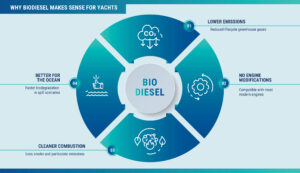
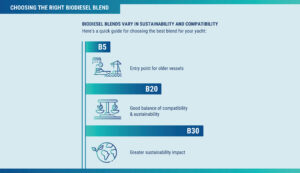
In practice, yacht owners use blends such as B5, B20 or B30. These blends offer a practical balance between sustainability and operational reliability.
THE BENEFITS OF SWITCHING TO BIODIESEL FOR YOUR YACHT
Reduce Your Carbon Footprint Immediately
Lifecycle greenhouse gas emissions from biodiesel blends can be significantly lower than those of conventional marine gasoil, depending on feedstock and production pathway.
No Engine Modifications Required
For biodiesel blends up to B20, most modern yacht engines are fully compatible without any mechanical changes.
Cleaner Burning, Cleaner Exhaust
Biodiesel produces less particulate matter, less visible smoke, and lower levels of unburned hydrocarbons.
Better for the Ocean in a Spill Scenario
Biodiesel biodegrades more readily than conventional diesel, helping reduce long-term environmental persistence in the event of a spill.
WHERE REGULATION IS HEADING
Environmental regulation across the global yachting sector is tightening, and certified biodiesel blends can support compliance with emerging carbon intensity frameworks.
WHAT BLEND IS RIGHT FOR YOUR YACHT?
B20: The Recommended Starting Point
B20 is broadly compatible with modern engines and delivers a meaningful emissions reduction with minimal operational impact.
B30: For Owners Ready to Go Further
B30 is suitable for many modern yachts, with closer monitoring of filters and lubrication.
B5: A Sensible Starting Point for Older Vessels
B5 provides a cautious entry point for classic yachts and older fuel systems.
Things to be aware of
Fuel Filters
Biodiesel can loosen existing deposits in fuel systems, which may require more frequent filter changes during the initial transition period.
Cold Weather Performance
Biodiesel has poorer cold-flow properties than marine gasoil. Lower blend levels are recommended for cold climates.
Fuel Quality Matters
Certified, waste-based biodiesel provides the strongest sustainability credentials. Peninsula’s biodiesel supply is ISCC EU certified.
Check your fuel systems on older yachts
On older vessels, hoses and seals should be checked for biodiesel compatibility.
MEET BFUTURE — PENINSULA’S PREMIUM SUSTAINABLE FUEL
BFuture is Peninsula’s premium Hydrotreated Vegetable Oil (HVO), produced from waste feedstocks and residues. It can be used in pure form or blended at any ratio up to 100%.
Ready to make the switch?
With the right fuel, the right supplier, and the right advice, sustainable yachting does not require compromise.