

For yacht owners and operators, the move towards more sustainable marine fuels is not simply an environmental decision. It is increasingly a commercial one. As regulations evolve, fuel technologies develop and demand for lower carbon operations grows, understanding the sustainable marine fuel cost and potential return on investment is becoming an important part of yacht fuel planning.
The financial case for sustainable fuel cannot be measured by the price per litre alone. Fuel performance, maintenance requirements, life-cycle greenhouse gas emissions, regulatory considerations and long-term operational resilience can all influence the overall value of a fuel choice.
For yacht owners considering their options, the key question is not simply what sustainable fuel costs, but what operational and environmental value it can deliver over the vessel’s lifetime?
Understanding sustainable marine fuel costs
Sustainable marine fuels may carry a price premium over conventional fossil fuels, depending on the product, location, availability and prevailing market conditions.
The overall cost of fuel can be influenced by factors including availability, transportation, storage, fuel efficiency and operational requirements. Depending on the fuel and vessel, there may also be wider benefits associated with reduced emissions and improved sustainability credentials.
Hydrotreated Vegetable Oil (HVO), for example, is increasingly being considered by yacht operators as a practical alternative to conventional diesel.
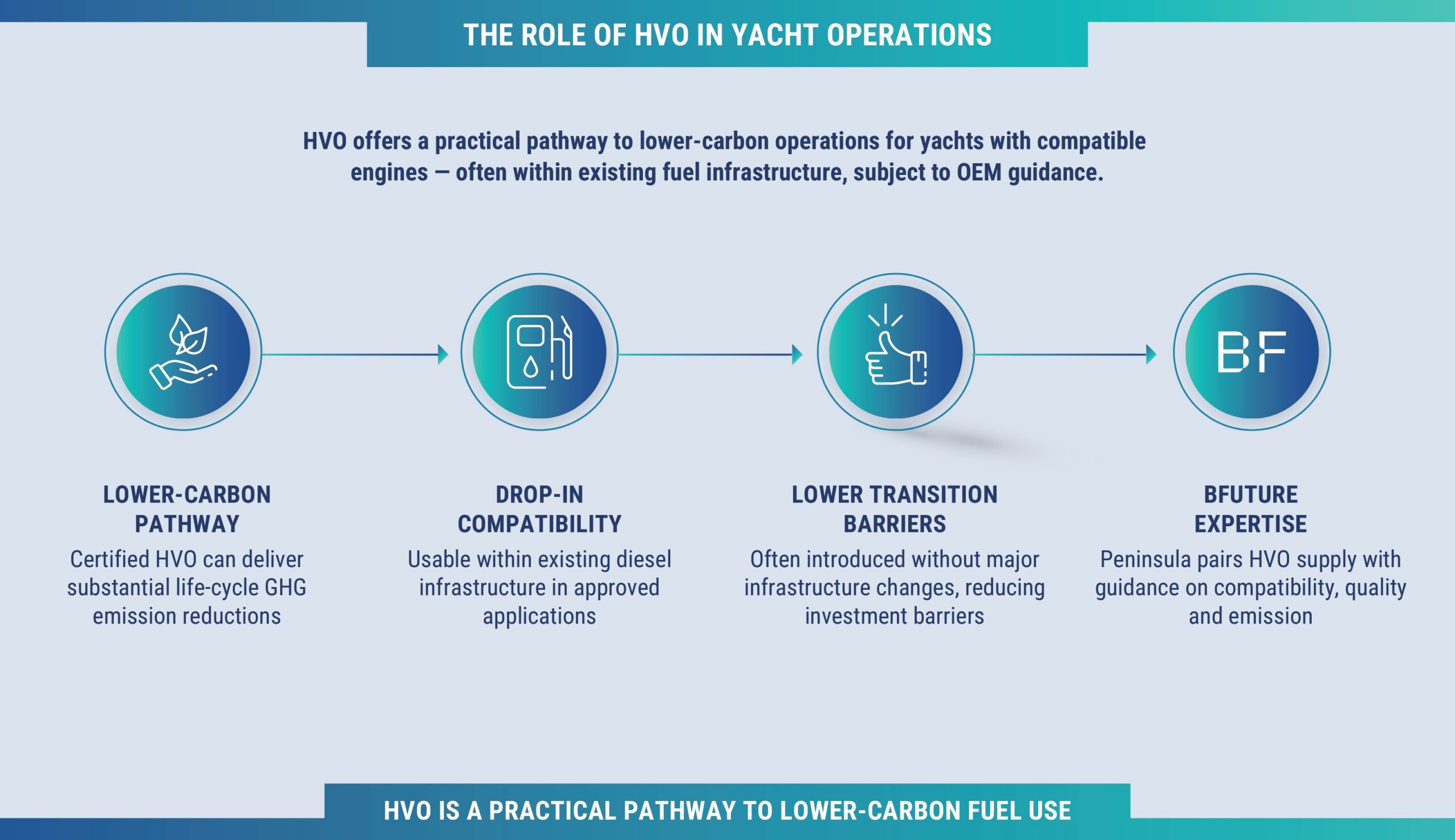
When produced from eligible waste and residue feedstocks, certified HVO can deliver substantial life-cycle greenhouse gas emissions reductions, depending on the feedstock, production pathway and applicable emissions-accounting methodology. It can also be used within existing diesel infrastructure in approved applications, subject to OEM guidance.
The right choice will ultimately depend on the individual yacht, its engines, cruising profile and fuel requirements.
Looking beyond the price per litre
When assessing yacht fuel investment, operators should consider the total cost of operation rather than focusing exclusively on the initial fuel price.
Fuel efficiency is one important consideration. Fuel that meets the required specification and is suitable for the vessel’s engine can support reliable combustion and consistent operation.
Fuel quality is equally important, as contamination or unsuitable fuel can result in increased maintenance requirements and unexpected downtime.
For a yacht operating extensively throughout the year, even relatively small improvements in operational efficiency can become significant when applied across thousands of litres of fuel consumption.
This means that the true financial assessment should consider the relationship between fuel cost, consumption, maintenance and operational reliability.
What is the potential ROI of sustainable marine fuel?
The financial and operational value of sustainable marine fuel will vary by yacht, depending on factors such as fuel consumption, operating profile, price differential, availability and the fuel being considered.
For some vessels, the financial return may be relatively direct, through operational efficiencies or reduced exposure to future regulatory costs. For others, the value may be more strategic, particularly where owners are seeking to reduce the vessel’s environmental footprint or future-proof its operation.
Rather than applying a single payback period to every yacht, a more useful approach is to assess the individual vessel’s fuel consumption and operating requirements alongside the available sustainable fuel options.
The role of HVO in yacht operations
HVO provides a practical pathway towards lower-carbon fuel use for yachts with compatible engines. Unlike some emerging marine fuels, HVO can often be introduced without major changes to existing fuel infrastructure, subject to confirmation from the relevant engine manufacturer.
For yacht owners, this can reduce some of the investment barriers associated with transitioning to alternative fuels. There is still an important need to consider fuel availability, manufacturer approval, storage requirements and supply logistics before making the switch.
Peninsula’s BFuture renewable fuel solution gives yacht operators access to HVO alongside guidance on engine compatibility, fuel quality, supply logistics and life-cycle greenhouse gas emissions.
Future-proofing your yacht investment
The financial implications of sustainable fuel extend beyond today’s operating costs. The maritime industry is moving towards tighter emissions requirements, greater environmental transparency and increased demand for lower carbon operations.
For yacht owners, preparing for these changes can help reduce the risk of being forced into a more expensive transition later. Investing in sustainable fuel solutions today can form part of a wider strategy to future-proof the vessel and maintain operational flexibility as the regulatory and fuel landscape develops.
There may also be reputational and asset value considerations. As sustainability becomes increasingly important to charter clients, buyers and the wider yachting industry, vessels with credible environmental strategies may be better positioned for changing market expectations.
However, these potential benefits should be assessed realistically. Sustainable fuel is one component of a broader decarbonisation strategy and should be considered alongside vessel efficiency, operational practices, technology and emissions management.
How to assess your sustainable fuel investment
There is no universal answer to whether sustainable marine fuel represents a worthwhile investment. The economics depend on the vessel and how it operates.
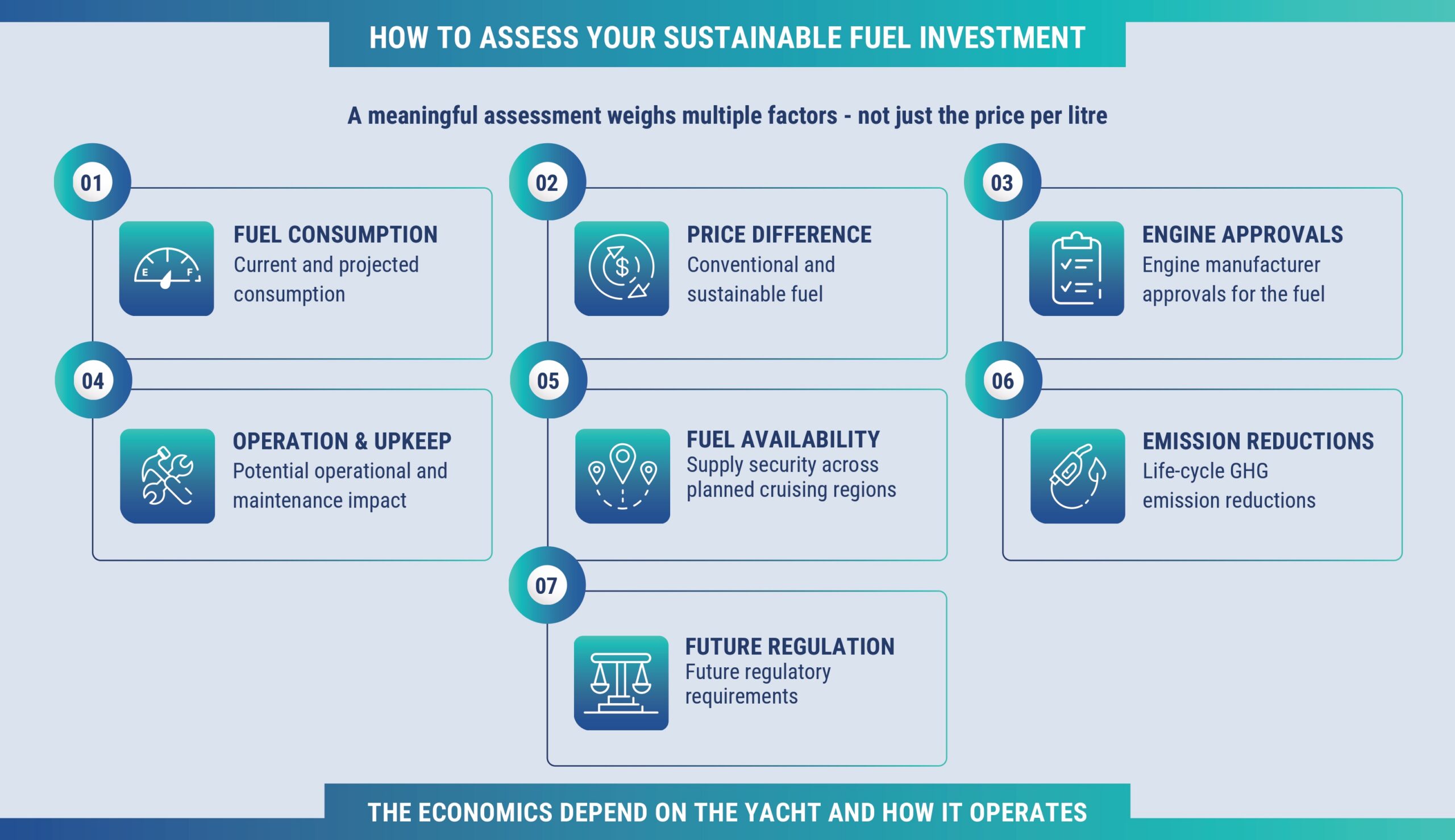
A meaningful assessment should consider:
- Current and projected fuel consumption
- Conventional and sustainable fuel price differences
- Engine manufacturer approvals
- Potential operational and maintenance impacts
- Fuel availability across planned cruising regions
- Life cycle emissions reductions
- Future regulatory requirements
Looking at these factors together provides a much more accurate picture of the potential return than comparing fuel prices alone.
Sustainable fuel is a long term investment
The transition towards sustainable marine fuel is not simply about accepting a higher fuel cost today. It is about understanding how fuel decisions fit into the long term operational and financial strategy of a yacht.
For some owners, the immediate priority may be reducing emissions. For others, it may be preparing for future regulations, improving sustainability credentials or maintaining flexibility as the marine fuel market evolves. In many cases, the most effective approach is to combine these objectives rather than viewing them in isolation.
As sustainable fuel technologies mature and availability increases, the economics are likely to continue evolving. Yacht owners who understand their options now will be better positioned to make informed decisions as the market develops.
Calculate your sustainable fuel ROI with Peninsula
Through our expertise in marine fuel supply and sustainable fuel solutions, including BFuture, we can help yacht owners, captains and managers assess the options available and understand how they could fit into their wider fuel strategy.
If you are considering HVO or another sustainable marine fuel solution, speak to Peninsula to assess availability, compatibility, supply requirements and certified life-cycle greenhouse gas emissions for your yacht.