

For yacht owners, captains and engineers, choosing the right marine fuel is about more than availability and price. The fuel supplied to a vessel needs to be suitable for its engines, compatible with the manufacturer’s requirements and appropriate for the way the yacht operates. Understanding marine fuel engine compatibility is therefore an important part of protecting engine performance and avoiding unnecessary operational risk.
Modern marine engines are designed to operate with specific fuel characteristics, and manufacturers may publish detailed requirements covering fuel specifications, quality and permitted alternatives. Before introducing a new fuel, including renewable options, yacht operators should always confirm the relevant guidance for their particular engine.
Why fuel approvals matter
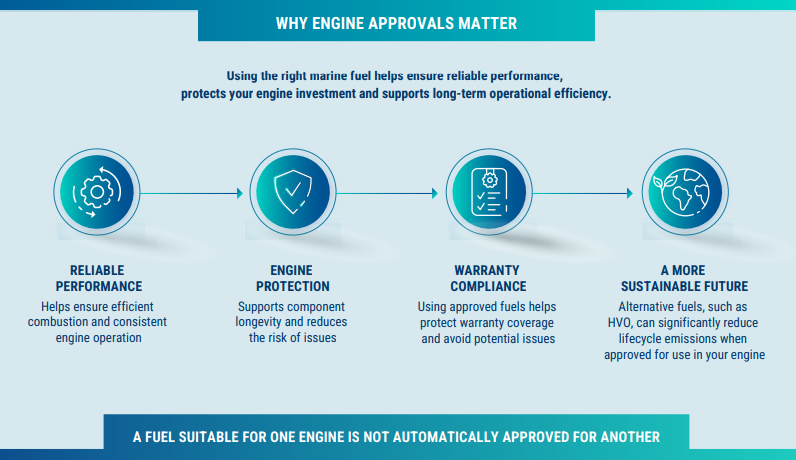
Engine manufacturers, often referred to as OEMs, establish fuel requirements to help ensure reliable combustion, component protection and long term engine performance. These requirements can cover parameters such as viscosity, density, sulphur content, lubricity, stability and contamination levels.
Using fuel that falls outside the manufacturer’s specified parameters can create performance issues and, depending on the circumstances, may have implications for warranty coverage. This makes fuel approvals an important consideration when sourcing marine fuel, particularly when changing fuel type or introducing a new blend.
The fact that a fuel is suitable for one engine does not automatically mean it is approved for another. Engine model, age, operating conditions and manufacturer’s recommendations all need to be considered.
Checking yacht engine fuel compatibility
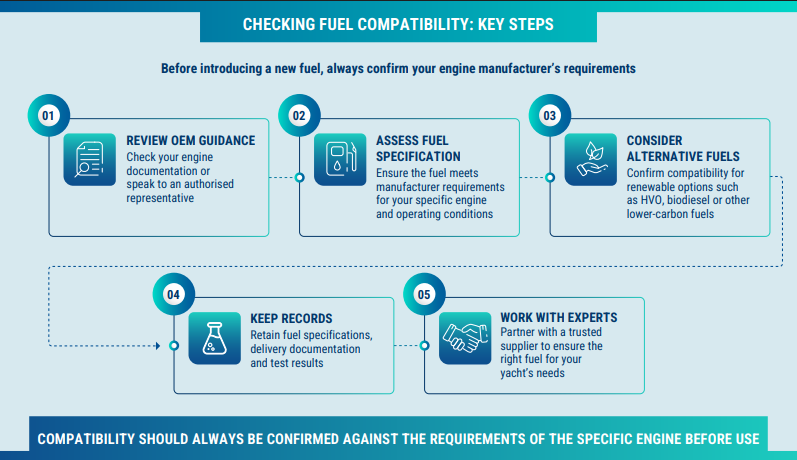
Before selecting yacht engine fuel, operators should establish exactly what their engine manufacturer recommends. This information can normally be found in the engine documentation or obtained directly from the OEM or an authorised representative.
The process should consider both the fuel specification and the intended application. A fuel may meet a recognised marine standard but still require confirmation from the engine manufacturer for a particular engine model or operating condition.
This is particularly relevant when considering alternative fuels. Renewable diesel products such as Hydrotreated Vegetable Oil (HVO) can offer significant life cycle emissions benefits, but compatibility should always be confirmed against the requirements of the specific engine before use.
Manufacturer guidelines and warranty protection
Following manufacturer guidance is an important part of protecting an engine investment. Warranty terms can vary between manufacturers and engine models, so yacht operators should understand whether a particular fuel has been approved, recommended or otherwise accepted for their equipment.
Keeping appropriate documentation can also provide valuable assurance. Fuel specifications, delivery documentation, test results and records of manufacturer guidance can help demonstrate that appropriate fuel management procedures have been followed.
For yacht managers and engineers, this creates a clear link between fuel procurement and preventative maintenance. Selecting the right fuel is not simply a purchasing decision. It is part of an overall approach to engine reliability and asset protection.
Optimising performance through the right fuel
Fuel compatibility can also have a direct impact on operational performance. Fuel that meets the appropriate specification and is correctly handled can support efficient combustion, reliable engine operation and consistent performance.
Conversely, poor quality or unsuitable fuel can contribute to issues such as injector fouling, filter blockage, deposits and reduced combustion efficiency. These problems can increase maintenance requirements and, in more serious cases, lead to unplanned downtime.
This is why marine fuel engine compatibility should be considered alongside fuel quality assurance. A suitable fuel still needs to be stored, handled and delivered correctly to maintain its condition throughout the supply chain.
What about alternative marine fuels?
The marine fuel market is evolving as yacht operators look for practical ways to reduce emissions. HVO and other lower carbon fuel solutions are becoming increasingly relevant, but the transition needs to be managed carefully.
Alternative fuels should be assessed against the specific requirements of the yacht’s engines and fuel systems. Factors such as engine approval, fuel specification, storage, availability and operational requirements should all be considered before making a change.
For yachts exploring sustainable fuel options, working with an experienced marine fuel supplier can help simplify this process and ensure that environmental objectives are balanced with operational requirements.
A practical approach to fuel compatibility
There is no single fuel solution that is right for every yacht. The most appropriate choice depends on the vessel, engine configuration, cruising profile and local fuel availability.
A sensible approach is to review the manufacturer’s requirements first, confirm the specification of the proposed fuel and establish whether any additional approval or documentation is required. Fuel quality testing can then provide further assurance that the product supplied meets the required specification.
This approach helps yacht owners and operators make informed fuel decisions while reducing the risk of compatibility issues further down the line.
Verify fuel compatibility with Peninsula
At Peninsula Yacht Services, we understand that fuel selection needs to take into account more than supply and price. Marine fuel engine compatibility, fuel quality and manufacturer requirements all form part of a responsible yacht fueling strategy.
Our team can help yacht owners, captains and engineers navigate fuel specifications and explore suitable marine fuel options for their vessels. As the market develops and alternative fuels become more widely available, we can also help operators assess their options while keeping engine requirements and operational reliability in focus.
Before introducing a new fuel or changing your yacht’s existing fuel strategy, speak to Peninsula’s technical team to verify compatibility and make an informed decision.