
Sustainability is now a defining factor in the yachting sector, as regulatory requirements evolve and owners place greater focus on reducing operational emissions; the conversation is shifting beyond compliance towards long term carbon reduction strategies. For many operators, the ultimate goal is a carbon neutral yacht, achieved through a combination of operational improvements, emissions management, and more sustainable fuel choices.
While complete decarbonisation remains a complex challenge for the marine sector, significant progress can already be made through the adoption of net zero marine fuel solutions and a better understanding of the full environmental impact of fuel consumption. By taking a strategic approach, yacht owners can begin reducing emissions today while preparing for the future of sustainable yachting.
What does carbon neutral yachting mean?
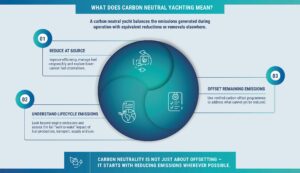
A carbon neutral yacht is one that balances the greenhouse gas emissions generated during operation with equivalent emissions reductions or removals elsewhere. In practical terms, this means reducing emissions as much as possible and offsetting any remaining carbon footprint through verified environmental projects.
Achieving carbon neutrality is not simply about purchasing offsets. The most effective strategies begin with reducing emissions at source through improved efficiency, responsible fuel management, and the adoption of lower carbon fuel alternatives. Offsetting then becomes a tool for addressing emissions that cannot yet be eliminated.
For yacht owners, this approach provides a realistic pathway towards reducing emissions while maintaining operational flexibility.
The role of sustainable marine fuels
Fuel choice is one of the most significant factors influencing a yacht’s carbon footprint. Traditional marine fuels remain essential to global yacht operations, but the industry is increasingly exploring alternatives that offer lower life cycle emissions.
This is where net zero marine fuel solutions are gaining attention. Sustainable marine fuels, including certain biofuel blends, can deliver lower life cycle emissions compared with conventional fuels, depending on feedstock, blend and certification framework. Unlike measures that only address emissions at the point of combustion, sustainable fuels are evaluated across their entire production and supply chain.
This broader assessment provides a more accurate understanding of environmental impact and helps operators make informed decisions about fuel procurement.
As demand for sustainable yachting solutions continues to grow, sustainable marine fuels are expected to play an increasingly important role in helping the industry reduce its carbon footprint.
Understanding life cycle emissions
One of the most important concepts in carbon reduction is life cycle emissions, sometimes referred to as “well to wake” emissions. This approach considers the total greenhouse gas impact associated with fuel production, transportation, distribution, and final consumption.
Historically, environmental assessments often focused solely on emissions produced by the engine. However, this only tells part of the story. Two fuels may produce similar emissions during combustion but have very different environmental impacts when production methods are considered.
By evaluating life cycle emissions, yacht operators can better understand which fuel options provide genuine carbon reduction benefits and support their wider sustainability objectives.
For those pursuing a carbon neutral yacht strategy, life cycle analysis is an essential component of effective decision making.
Carbon offsetting as part of the journey
Even with advances in fuel technology, some emissions remain difficult to eliminate entirely. This is where carbon offsetting can support a broader sustainability strategy.
Carbon offset programmes invest in projects that reduce, avoid, or remove greenhouse gas emissions elsewhere. These projects may include renewable energy development, reforestation initiatives, habitat restoration, or carbon capture technologies.
The effectiveness of offsetting depends on the quality and credibility of the projects being supported. Yacht owners should prioritise programmes that are independently verified and aligned with recognised international standards.
While offsetting should not replace direct emissions reductions, it can play an important role in helping operators move towards a carbon neutral yacht model while the industry continues its transition towards lower carbon energy sources.
The importance of certification schemes
As sustainability becomes a greater focus within the marine sector, transparency and accountability are increasingly important. Certification schemes help provide confidence that carbon reduction claims are supported by robust methodologies and independent verification.
Certification can apply to both sustainable fuel products and carbon offset programmes. These frameworks ensure that emissions calculations are accurate, environmental claims are credible, and reporting standards are consistent.
For yacht owners and managers, certification provides reassurance that investments in sustainability initiatives are delivering measurable outcomes rather than relying on assumptions or unverified claims.
As the market for net zero marine fuel continues to develop, certification schemes will remain an important part of demonstrating environmental performance and supporting stakeholder confidence.
Building a practical pathway to net zero
The transition towards sustainable yachting does not happen through a single action. Instead, it requires a combination of measures that work together to reduce environmental impact over time.
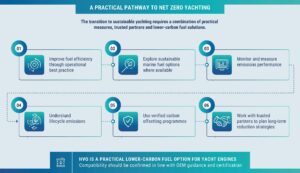
A practical carbon reduction strategy may include:
- Improving fuel efficiency through operational best practices
- Exploring sustainable marine fuel options where available
- Monitoring and measuring emissions performance
- Understanding fuel life cycle emissions
- Incorporating verified carbon offsetting programmes
- Working with trusted industry partners to develop long term sustainability plans
Every yacht operates differently, which means carbon reduction strategies should be tailored to individual operational profiles and cruising patterns.
The future of sustainable yachting
The journey towards net zero is already underway across the maritime sector. As alternative fuels, carbon accounting frameworks, and sustainability technologies continue to evolve, yacht owners will have access to an increasing range of solutions for reducing environmental impact.
What remains clear is that fuel choice will be one of the most important drivers of progress. Sustainable marine fuels provide an opportunity to reduce emissions today while supporting the industry’s longer term decarbonisation goals.
For operators seeking to future proof their vessels and align with changing expectations, investing in sustainability is becoming an operational consideration as much as an environmental one.
Sustainable fuels and the role of HVO
Renewable fuels are becoming an important part of the transition towards sustainable yachting, with Hydrotreated Vegetable Oil (HVO) emerging as one of the most practical solutions available today. HVO
produced from waste and residue feedstocks, is emerging as a practical option. It can often be used as a drop-in fuel in compatible engines, subject to OEM guidance, and can offer materially lower life cycle emissions when certified.
Through BFuture, Peninsula’s renewable fuel solution, yacht operators can access lower carbon fuel alternatives and expert guidance on reducing their environmental impact. For those pursuing a carbon neutral yacht strategy, HVO offers a practical step towards lowering emissions without compromising operational performance.
Start your carbon neutral journey with Peninsula
At Peninsula, we recognise that the transition towards a carbon neutral yacht requires practical solutions, trusted expertise, and a clear understanding of evolving fuel technologies.
Our team works closely with yacht owners, captains, and managers to support their sustainability objectives through fuel guidance, emissions awareness, and access to emerging net zero marine fuel opportunities. By helping clients understand life cycle emissions, carbon reduction pathways, and fuel quality considerations, we support informed decision making at every stage of the journey.
Whether you are taking your first steps towards sustainable yachting or developing a comprehensive decarbonisation strategy, Peninsula works with clients to support informed decisions around fuel selection, emissions meassurement and practical decarbonisation pathways.